
Gender in the Arts

While researching depictions of women in art, I came across a section of the Museum of Modern Art (MoMA) website entitled "Constructing Gender." According to the site, "Many artists have used their work to examine, question, and criticize the relationships between gender and society."

As part of this section, MoMA presents seven images that address the social construct of gender, ranging from the 1920s to the 2000s by artists such as Frida Kahlo, Laurie Simmons, and Joan Jonas. It is fascinating to see how both women and men have commented on gender through their art. 
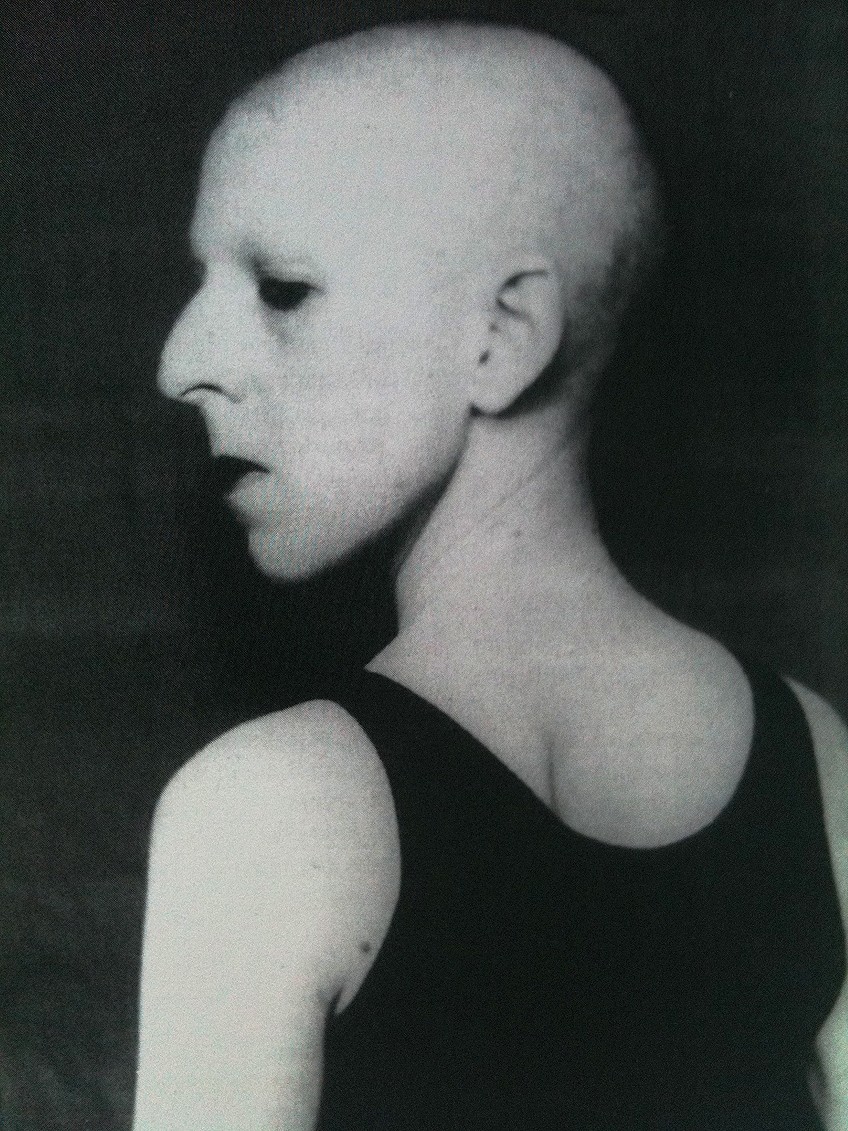
Self-Portrait, from Bifur, no 5 (1930) by Claude Cahun; lightsgoingon, CC BY 2.0, via Wikimedia Commons

One such creative is Claude Cahun, a queer, gender-neutral, French-born writer, photographer, and performer. Cahun produced much of their work in the 1920s and 30s, but most of it was destroyed after they were incarcerated for resisting the Nazi regime. Their work challenged binary social constructs of gender, particularly the idea that gender identity was fixed. They have influenced more modern artists as well, including musician David Bowie, who used Cahan's art in his New York performance in 2007 (Myer, 2023).


References

"Constructing Gender." Museum of Modern Art (website). https://www.moma.org/collection/terms/investigating-identity/constructing-gender

Dones, Serena. "Claude Cahun: Early Queer Art in Paris." YouTube.com, December 7, 2020. https://www.youtube.com/watch?v=HxldV26KTLE

Myer, Isabella. "Claude Cahun – A Look at Claude Cahun’s Life and Artistic Contribution." ArtInContext.org, August 1, 2023. https://artincontext.org/claude-cahun/

Comments

Popular posts from this blog

The Bluest Eye and Reading Primers

  Mike, Pam, Penny, and Father In The Bluest Eye , Toni Morrison explores the dynamic between white standards of beauty, womanhood, home life, and family and the realities of her characters. She uses the classic Dick and Jane primers as a visual of those white standards: two heterosexual, middle-class parents and three very blonde children who are always clean and well-dressed. This family experiences only minor interpersonal conflicts, and the children have lives that are defined by safety and playtime. The mother stays at home and cares for the children, while the father works outside the home and returns at dinnertime and on weekends. These children do not know hunger, or cold, or pain, or fear. Morrison contrasts this with the lives of her characters, who view these storybooks as “how life is supposed to be” even though their experiences are nothing like those of Dick, Jane, and Baby. So many young children of color learned to read with Dick and Jane primers, but these books d...

Reclaiming the F-Word (The Body: Creativity, Control, and Power)

“Militant. Radical. Man-hating.” ( Bennet, 2014 ) Is this what feminism means in our culture? In Brancaccio, Mehta, and Menendez’s article, “ Most Millennials Believe in Gender Equity, but Avoid the ‘Feminist’ Label ” the authors discuss how many young people shy away from describing themselves as feminists. My classmates and I felt that this was partly due to negative connotations surrounding the word, and presented ideas for how to overcome this stigma and how to reframe the feminist label as a positive one. One of the suggestions was that we must use the media to begin to take control of the narrative surrounding feminism. As I read further about this issue, I realized that is already happening in U.S. culture. Jason LaVeris—FilmMagic/Getty Images Beyonce is an example of how feminism is being redefined for the younger generations. She was the focus of another article that we read in this module (LaVoulle and Ellison’s “The Bad Bitch Barbie Craze and Beyonce” in Taboo , Fall 2017), ...

Eve

Dominichino,  The Rebuke of Adam and Eve , 1626 While scholars such as Phyllis Trible (1973) have attempted to depatriarchalize Biblical interpretations to somehow reconcile faith and feminism, most feminist scholars who write about Christianity or the Bible consider the religion to be irrevocably tied to patriarchal values. For them, the story of Eve is the story of the beginning of the patriarchy. According to the Genesis account of the creation of humanity, God created Adam out of dust, in the image of God, and gave him dominion over all living things. However, God decided that Adam needed a helper, and created Eve from Adam's rib. While the creation from a rib -- from Adam's own flesh, and from his side -- may seem to imply that the two would be equals, standing side by side, Eve was not given dominion over living things as Adam was. While she was alone in the Garden, she listened to the advice of a serpent, who told her that if she ate the forbidden fruit from the Tree of...